
Supplements / Magnesium / NOW Foods – Magnesium Glycinate with BioPerine
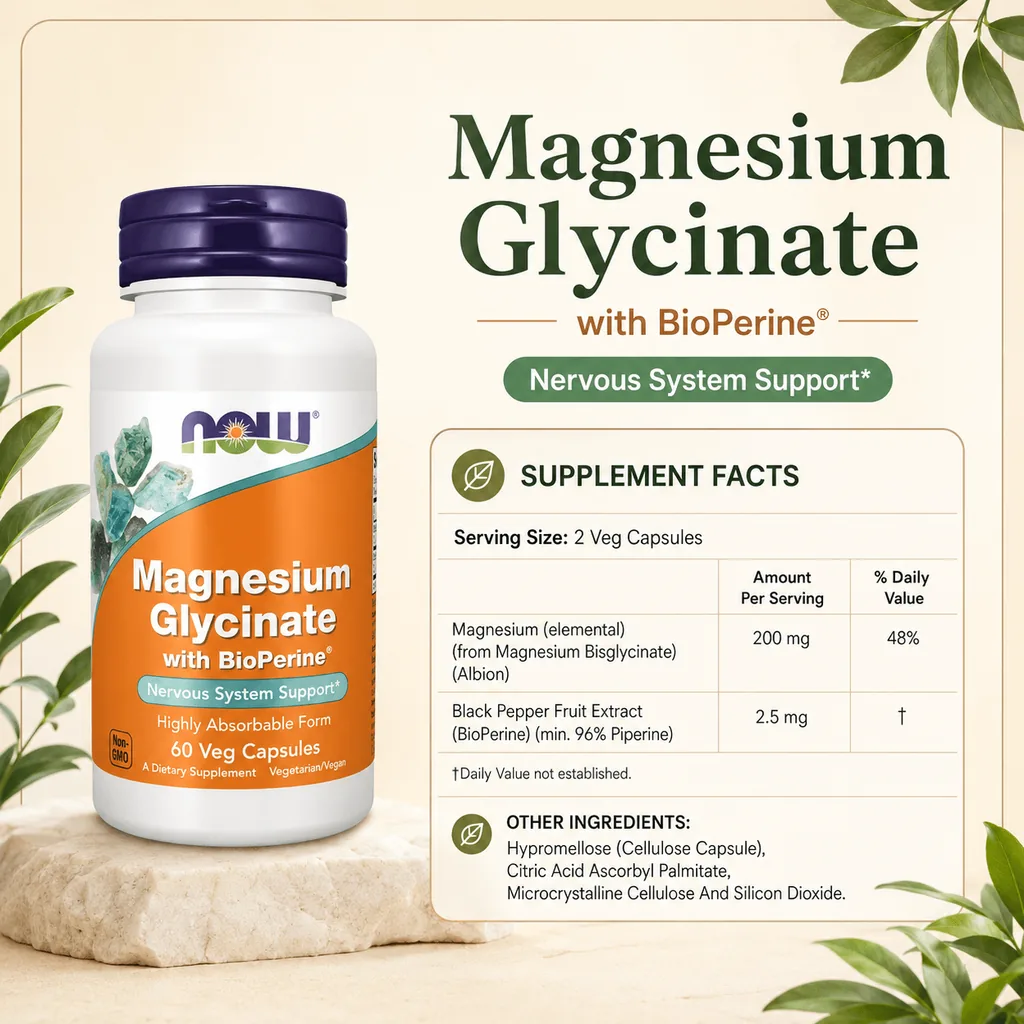
NOW Magnesium Glycinate with BioPerine — 60 Veg Capsules
Compare NOW Magnesium Glycinate with BioPerine: its formula, serving size, capsule format, and how it differs from the other NOW magnesium options.
This is an affiliate link. We may earn a commission at no extra cost to you.
Other flavors, sizes & formats
Same brand line. tap a button to open that HerbsPro listing.
Understand the Ingredients Before Choosing Your Magnesium
Use the ingredient guide below to distinguish the featured glycinate-with-BioPerine capsules from the other NOW options. Each entry identifies whether it belongs to the main product, an alternative formula, or the delivery format.
Key ingredients and roles
- MAIN PRODUCT — Magnesium bisglycinate
Provides magnesium for normal muscle and nerve function. Glycine is bound within the compound; it is not a separately quantified glycine supplement.
- MAIN PRODUCT — BioPerine black pepper extract
The added piperine-containing extract distinguishes this capsule formula. Its inclusion alone does not establish greater clinical benefit or a specific increase in magnesium absorption.
- MAIN PRODUCT — Supporting ingredients
Hypromellose, citric acid, ascorbyl palmitate, microcrystalline cellulose, and silicon dioxide help formulate the capsule. They are not additional magnesium sources. General excipient roles are explained in the review.
- OTHER OPTIONS — Magnesium glycinate / bisglycinate
The separate tablets also use this glycine-bound magnesium source, without BioPerine on the current label.
- OTHER OPTIONS — Magnesium citrate
A source of magnesium in the citrate capsules, tablets, and softgel blend. Citrate is generally more readily absorbed than oxide; tolerance still varies.
- OTHER OPTIONS — Magnesium oxide
Included in the 400 mg capsule blend and current softgel formula. It supplies magnesium but is generally less bioavailable than citrate.
- OTHER OPTIONS — Magnesium aspartate
One of the magnesium sources in the 400 mg capsule blend. The label does not disclose a separate amount or establish a distinct benefit from this source.
- OTHER OPTIONS — Magnesium malate
Magnesium combined with malate, present in the malate tablets and softgel blend. The compound weight differs from elemental magnesium; the label alone does not demonstrate a separate energy or fatigue benefit.
- FORMATS — Tablets, capsules, and softgels
These are delivery formats, not active ingredients. Tablet binders, capsule shells, and softgel oils or coatings differ; the softgels listed here contain bovine gelatin.
The main product does not contain every magnesium form listed here. Read the full review for ingredient lists, serving comparisons, and current label differences. General ingredient roles are not promises of individual results.
NOW Magnesium Glycinate with BioPerine: Is This Formula Right for You?
This NOW selection pairs magnesium bisglycinate with BioPerine black pepper extract in a 60-capsule bottle. It is worth comparing if you prefer a glycinate formula in capsules and want to understand what the added extract changes about the ingredient list.
This is an editorial overview of product information, not a hands-on test or a report of customer results.
Affiliate disclosure: BilloraCare may earn a commission from purchases made through affiliate links, at no extra cost to you.
What Stands Out
- Glycinate in capsule form: a different presentation from NOW's separate glycinate tablets.
- Added black pepper extract: BioPerine distinguishes this formula from magnesium-only options. An extra ingredient is a reason to compare suitability, not an automatic advantage for everyone.
- Compare servings, not just bottle counts: the selected bottle contains 30 two-capsule servings. That is not necessarily 30 days of use.
What to Consider About the Formula
Each two-capsule serving lists 200 mg of elemental magnesium from magnesium bisglycinate and 2.5 mg of BioPerine black pepper fruit extract, standardized to at least 96% piperine. The magnesium amount applies to the full serving, not each capsule.
Glycine is part of the bisglycinate compound. The label does not specify a separate free-glycine dose. Likewise, the presence of BioPerine does not establish a measured improvement in magnesium absorption or a guaranteed benefit for this finished product.
How to Use It
The manufacturer's directions are two capsules one to two times daily with food. Follow the bottle you receive and discuss the appropriate amount with a healthcare professional. Label directions describe the product; they are not personalized advice.
Important Considerations
Magnesium supplements may cause diarrhea, nausea, or abdominal cramping and can interfere with some antibiotics and osteoporosis medicines. Check suitability with a healthcare professional if you take medication, have kidney disease or another medical condition, are pregnant, or are breastfeeding. Mention the added black pepper extract when reviewing this formula.
For adults, the US upper limit for magnesium from supplements and medications is 350 mg daily, unless a healthcare professional recommends otherwise; magnesium naturally present in food is excluded. Two servings of this product provide 400 mg. Include other supplements and medicines when reviewing your total intake. Keep out of children's reach.
Compare the Other NOW Magnesium Options
These are separate products linked on this page. Their ingredients are not all contained in the main glycinate-with-BioPerine formula. The summaries below use current manufacturer labels; check the retailer's label for your selected presentation because formulas and supporting ingredients can change.
Magnesium Glycinate — 180 Tablets
Active source: magnesium bisglycinate; two tablets provide 200 mg of elemental magnesium. This separate tablet formula does not list BioPerine.
Other listed ingredients: citric acid, hydroxypropyl cellulose, vegetable stearic acid, silicon dioxide, and a vegetarian coating containing hypromellose, vegetable stearic acid, sunflower lecithin, triethyl citrate, and sunflower oil.
Practical difference: compare tablet size and supporting ingredients if you prefer a glycinate option without the added pepper extract.
Magnesium — 400 mg, 180 Veg Capsules
Active sources: magnesium oxide, citrate, and aspartate supply a combined 400 mg per capsule. The amounts contributed by each form are not disclosed. They are sources of the same mineral, not three separate nutrient doses.
Other listed ingredients: hypromellose, microcrystalline cellulose, vegetable stearic acid, and silicon dioxide.
Practical difference: a higher elemental amount in one capsule. More magnesium is not automatically a better choice; review the intake considerations above.
Magnesium Citrate — 120 Veg Capsules
Active source: magnesium citrate. NOW currently lists 400 mg of elemental magnesium per three capsules, with 40 servings in the 120-capsule bottle.
Other listed ingredients: hypromellose, ascorbyl palmitate, and silicon dioxide.
Check the strength: the option button on this page says 500 mg, which does not match the current manufacturer label. Verify the actual retailer label before choosing; this comparison does not confirm a 500 mg citrate formula.
Magnesium Citrate — 200 mg, 100 Tablets
Active source: magnesium citrate. Each tablet provides 200 mg; the labeled two-tablet serving supplies 400 mg. A 100-tablet bottle contains 50 labeled servings.
Other listed ingredients: hydroxypropyl cellulose, microcrystalline cellulose, a vegetarian coating containing hypromellose, calcium carbonate and glycerin, vegetable stearic acid, croscarmellose sodium, and vegetable magnesium stearate.
Practical difference: tablets rather than capsules, with a different ingredient list and unit count per serving.
Magnesium Citrate Blend — 180 Softgels
Active sources: the current manufacturer label lists citrate, glycinate, malate, and oxide, supplying a combined 400 mg of magnesium per three softgels. The contribution of each form is not disclosed. The shorter button label does not list every source.
Other listed ingredients: rice bran oil, a softgel shell containing bovine gelatin, glycerin and water, beeswax, and sunflower lecithin.
Practical difference: this is not a vegetarian alternative to the main product. Match the bottle label if avoiding gelatin or particular magnesium forms.
Magnesium Malate — 1,000 mg, 180 Tablets
Active source: magnesium malate. The current label lists 113 mg of elemental magnesium from 1,000 mg of magnesium malate per tablet. The 1,000 mg figure is the compound weight, not the elemental magnesium amount.
Other listed ingredients: hydroxypropyl cellulose, microcrystalline cellulose, vegetable stearic acid, croscarmellose sodium, vegetable magnesium stearate, silicon dioxide, and a vegetarian coating containing hypromellose, calcium carbonate and glycerin.
Practical difference: compare the elemental amount and intended daily use rather than the large compound-weight number on the front.
What the Supporting Ingredients Do
These general formulation roles help interpret the lists above; manufacturers do not specify every ingredient's precise role or amount in each product. Cellulose derivatives commonly form capsule shells, bind tablets, or provide bulk. Croscarmellose sodium helps tablets break apart. Silica supports powder flow, while stearic acid and stearates commonly assist manufacturing. Citric acid can help manage acidity; ascorbyl palmitate is commonly used as an antioxidant formulation ingredient.
Coating ingredients help form or soften the tablet surface. In softgels, gelatin forms the shell, glycerin helps keep it flexible, water is part of the shell, oils act as carriers, beeswax helps structure the fill, and lecithin helps ingredients disperse. These roles do not establish additional health benefits at the amounts present.
Quick Questions
Is this the same as NOW Magnesium Glycinate tablets?
No. The featured product is the capsule formula with BioPerine. The tablet option has a different supporting ingredient list.
Does glycinate guarantee better sleep?
No. This review does not establish treatment for insomnia, anxiety, or muscle cramps. Persistent symptoms deserve assessment rather than a supplement guarantee.
Should I take several of the options together?
These links are for comparison, not a combined regimen. Review total magnesium and suitability before combining products.
Our Take
NOW Magnesium Glycinate with BioPerine is a practical candidate if you prefer capsules and specifically want this combination. If you would rather avoid the added pepper extract, compare the separate glycinate tablets. The most useful decision is based on the actual formula, serving size, dietary requirements, and total cost—not the biggest number or longest ingredient list.
Label information checked against NOW Foods product information and the selected HerbsPro listing. General magnesium information checked against the NIH Office of Dietary Supplements. Formulas may change; the bottle you receive is the reference for use and ingredient restrictions.