
Supplements / Magnesium / Nature Made – Magnesium Glycinate
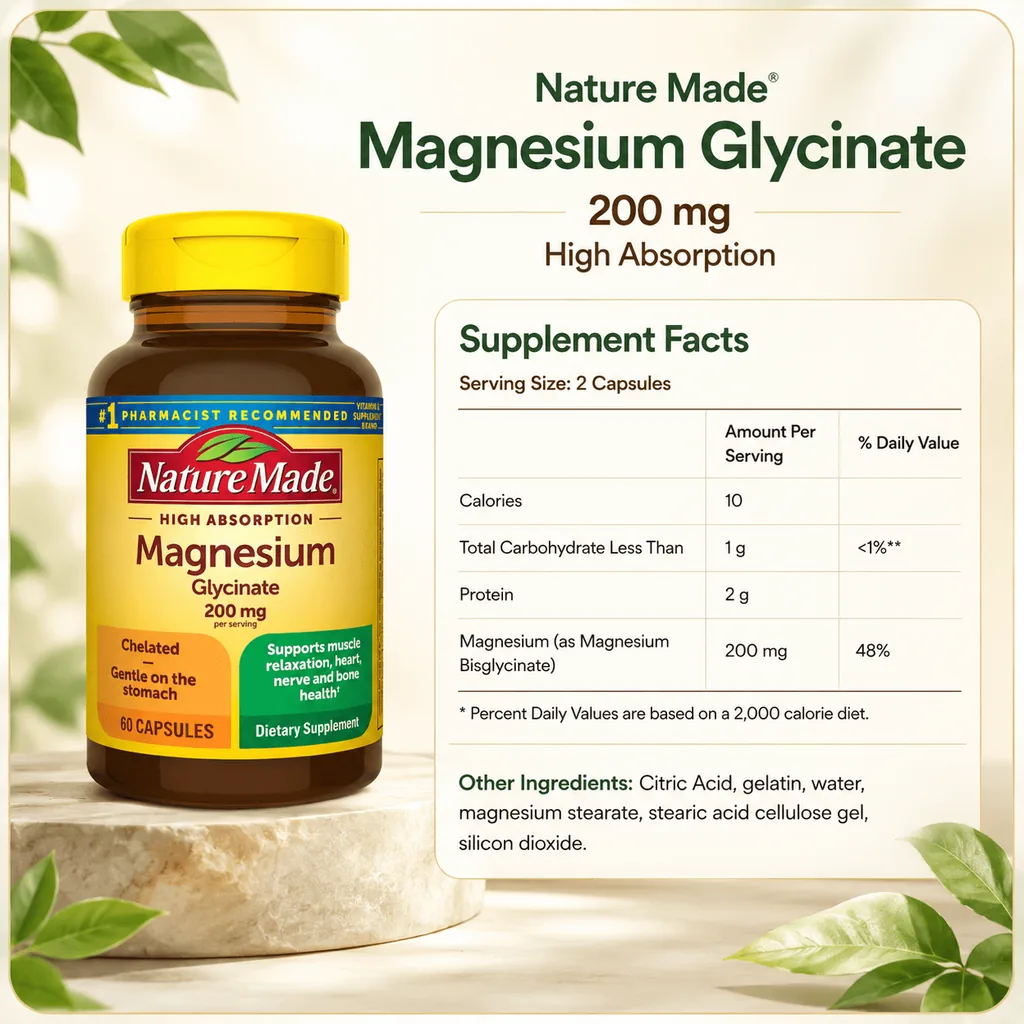
Nature Made Magnesium Glycinate
Compare Nature Made Magnesium Glycinate: serving size, ingredients, advantages, limitations, and the oxide and citrate options linked on this page.
This is an affiliate link. We may earn a commission at no extra cost to you.
Other flavors, sizes & formats
Same brand line. tap a button to open that HerbsPro listing.
Magnesium Glycinate · 200 mg per 2 Capsules · 60 Capsules
The featured product is magnesium glycinate. Use this guide to distinguish its ingredients from the separate oxide and citrate options. Choose by formula, serving size, dietary requirements, and cost per serving.
Key ingredients and roles
- MAIN PRODUCT — Magnesium bisglycinate
The magnesium source in the featured capsules. Glycine is bound to magnesium; this is not a separately dosed glycine supplement.
- MAIN PRODUCT — Gelatin and water
Support the capsule shell. The listed gelatin means this presentation is not suitable for a vegan diet.
- MAIN PRODUCT — Citric acid
A formulation ingredient commonly used to control acidity; it is not a separate active magnesium citrate dose.
- MAIN PRODUCT — Cellulose gel
A supporting ingredient used to give the capsule contents bulk and structure.
- MAIN PRODUCT — Magnesium stearate and stearic acid
Common manufacturing lubricants. Magnesium stearate should not be confused with the main magnesium source or treated as another therapeutic dose.
- MAIN PRODUCT — Silicon dioxide
A flow aid that helps powders resist clumping during manufacture.
- OTHER OPTIONS — Magnesium oxide
The magnesium source in the linked 250 mg tablets and liquid softgels. Changing the delivery format does not turn oxide into glycinate.
- OTHER OPTION — Magnesium citrate
The magnesium source in the separate citrate softgels. Their serving size differs from the oxide softgels.
- FORMATS — Capsules, tablets, and softgels
Delivery formats, not active ingredients. Shells, oils, binders, and coatings differ between presentations; review the exact ingredient list if you have dietary restrictions.
The alternative forms below are separate products, not additional ingredients in the featured glycinate capsules. Supporting ingredient lists can change; check the bottle supplied by the retailer.
Nature Made Magnesium Glycinate: Is This the Right Presentation for You?
If you want a magnesium glycinate capsule with a clearly stated serving, this Nature Made selection is worth comparing. The featured bottle contains 60 capsules, with 200 mg of elemental magnesium per 2-capsule serving. That gives 30 labeled servings.
This is an editorial assessment of product information, not a hands-on test or a report of customer results.
Affiliate disclosure: BilloraCare may earn a commission when you purchase through our affiliate links, at no additional cost to you.
Quick Verdict
The strongest reason to choose this presentation is a preference for glycinate in capsules. Before buying, consider whether taking two capsules suits you and whether gelatin fits your dietary requirements. The oxide and citrate buttons on this page lead to different formulas, so they should not be treated as interchangeable bottle sizes.
What Stands Out
- Identifiable magnesium form: bisglycinate, also described as glycinate, makes it easier to compare like-for-like formulas.
- Clear serving information: compare the amount per full serving instead of relying on the number printed on the front of the bottle.
- Useful value comparison: divide the current bottle price by the number of labeled servings, then compare delivery costs.
Limitations to Consider
- The serving uses two capsules, which may not suit someone seeking a single-unit option.
- The listed formula contains gelatin, so it is not a vegan choice.
- The label alone cannot establish how much better you will feel, or whether supplementation is necessary for you.
Ingredients and Their Roles
Magnesium bisglycinate supplies the mineral. Magnesium contributes to normal muscle and nerve function and energy metabolism. Glycine forms part of the compound; the label does not establish a separate glycine dose or an independent sleep benefit.
The retailer lists citric acid, gelatin, water, magnesium stearate, stearic acid, cellulose gel, and silicon dioxide as other ingredients. These support formulation and manufacturing. The ingredient guide above explains their general roles; they should not be marketed as additional wellness benefits. Confirm the list on the bottle you receive.
Compare the Other Nature Made Options on This Page
These are alternatives to choose between, not a suggested supplement combination.
Magnesium Oxide — 250 mg, 90 Liquid Softgels
The manufacturer lists 250 mg per softgel. A 90-count bottle therefore provides 90 labeled servings. This option is relevant if you prefer a softgel and a one-unit serving; the mineral source remains oxide.
View the oxide softgels on HerbsPro
Magnesium Oxide — 250 mg, 200 Tablets
This presentation provides 250 mg per tablet and 200 labeled servings. It offers a larger count, but compare the full delivered price and your preferred format before calling it better value.
The retailer lists cellulose gel, croscarmellose sodium, stearic acid, hypromellose, magnesium stearate, silicon dioxide, added color, polyethylene glycol, triethyl citrate, and polysorbate 80. These serve formulation purposes such as tablet structure, disintegration, coating, lubrication, and appearance.
View the oxide tablets on HerbsPro
Magnesium Citrate — 250 mg, 60 Softgels
The manufacturer specifies 250 mg per two softgels, giving 30 labeled servings in the linked bottle. Citrate is generally better absorbed than oxide, but that does not guarantee a better individual outcome.
Label check: the retailer's text contains an inconsistent supplement table. Use the current bottle label to confirm the serving and complete formula; do not assume every nutrient listed in that table belongs to this magnesium product.
View the citrate softgels on HerbsPro
How to Choose Between Them
Start with the magnesium form you intend to buy, then compare the complete serving, capsule or tablet count, and other ingredients. A larger milligram number or a larger bottle does not automatically make a product more suitable. If you avoid gelatin, particular colors, or specific allergens, check the exact presentation rather than applying one formula's claims to the entire brand.
Directions and Important Considerations
The manufacturer's directions for the featured glycinate are two capsules daily with water and a meal. This describes the label, not a personalized dosage recommendation. Follow the bottle's directions and discuss suitability with a healthcare professional if needed.
Magnesium supplements can cause diarrhea, nausea, or abdominal cramping. Seek professional advice before use if you have kidney disease, take medication, are pregnant, or are breastfeeding. Certain antibiotics and osteoporosis medicines can interact with magnesium. Review overlapping supplements instead of combining these options automatically.
Quick Questions
Does each capsule contain 200 mg?
No. The manufacturer confirms 100 mg per capsule; the front-label amount refers to the full serving.
Does this formula also contain oxide and citrate?
They are separate shopping options on this page. The featured product lists bisglycinate as its magnesium source.
Is it a guaranteed sleep aid?
No. A magnesium label does not establish that this product will treat insomnia or anxiety. Persistent symptoms deserve professional evaluation.
Which option is the best value?
Compare the current price per labeled serving, shipping, and the formula you actually want. A lower price per capsule can be misleading when serving sizes differ.
Our Take
Keep this Nature Made glycinate on your shortlist if capsules and this magnesium form match your preferences. Choose an alternative only after checking its own serving and ingredient list. The most useful purchase is the presentation that fits your requirements, rather than the one with the biggest number on the label.
Editorial sources: Nature Made product information, the linked retailer listings, and the NIH Office of Dietary Supplements magnesium fact sheet. Reviewed September 23, 2026. Educational content; not medical advice.